
Rethink Culture to Drive Successful Transformations
Rethink Culture to Drive Successful Transformations
December 2025

Read article


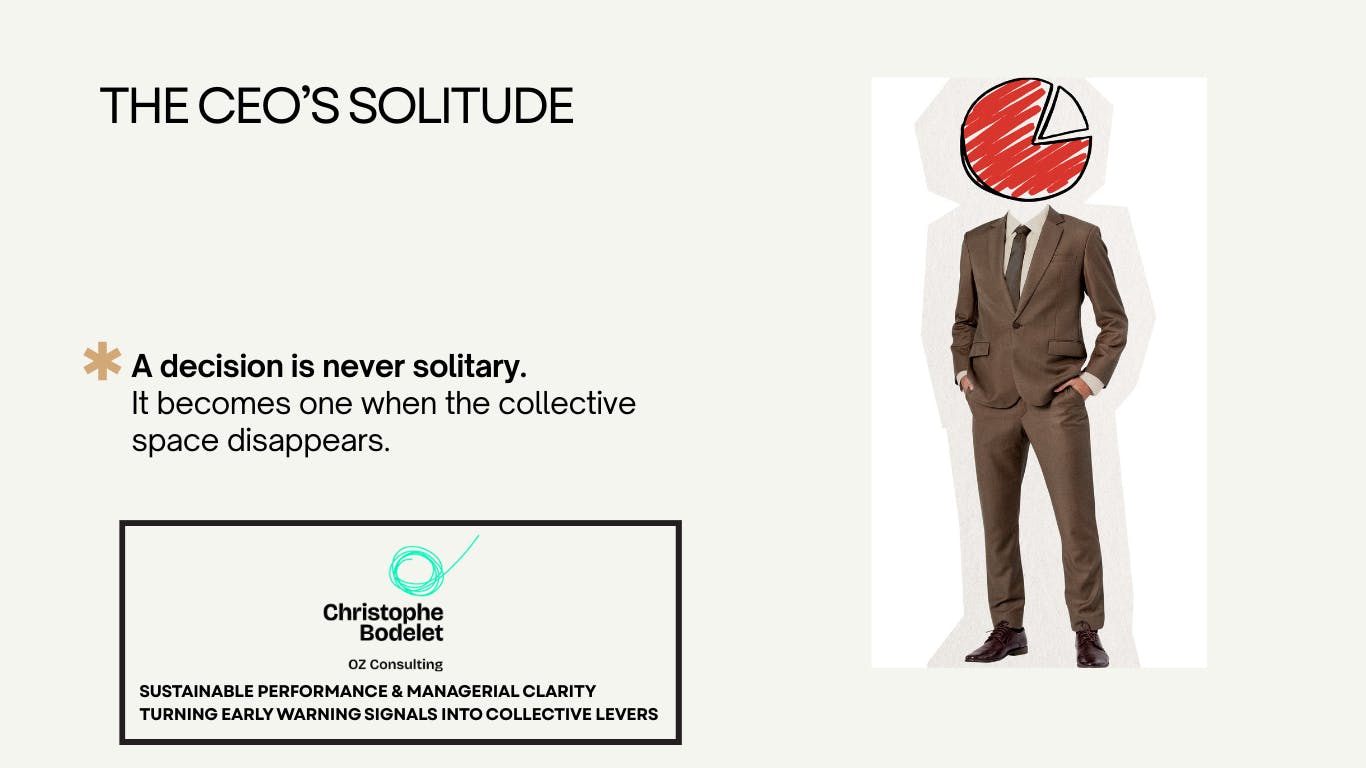
In a merger, the primary issue is not cultural.
It is decisional.
What many refer to as a “culture clash” is often the consequence of a governance system that is no longer able to make collective decisions under pressure.
When decision-making remains concentrated at the top for too long, the organization adapts… and then gradually stiffens.
Culture deteriorates not by intention, but through the accumulation of rushed decisions — or non-decisions framed as prudence.
This article adopts the CEO’s perspective.
Not to judge, nor to propose an ideal model, but to shed light on what many leaders realize too late: certain decisions, taken to “keep things going” or to move fast, produce deep human and cultural effects — invisible in the short term, yet structuring for what follows.
This perspective is based on composite testimonies from CEOs and executive committee members involved in mergers, post-merger integrations, and major transformations.

“People think I’m free because I’m at the top. In reality, I’m not.”
From the very first weeks, the list of decisions becomes overwhelming:
creating synergies, reassuring teams, aligning products, clarifying brands, demonstrating to shareholders that “things are moving.”
Everything has to move fast.
And everyone expects simple answers to complex problems.
Decisions must be made.
Or rather: the CEO decides — often under constraint.
Between market pressure, internal political balances, and the fear of weakening what has only just been assembled, some decisions are not truly chosen.
They are taken in order to hold things together.
To make the merger visible, strong decisions are often required:
On paper, these decisions are rational.
They often reassure shareholders.
But their cumulative effect weakens cultural integration.
Top-down decision-making imposes itself — not out of a desire for power, but out of necessity: things must move quickly.
And in this context, not deciding can be just as destructive as deciding brutally.
With hindsight, many leaders express the same realization:
“In trying so hard to move things forward, I damaged the culture — without seeing it.”

“I overestimated tools and underestimated human dynamics.”
Processes, indicators, formal governance structures — everything appeared to be in place.
Yet something was no longer working.
Resistance became silent.
Arbitrations were diluted.
Disagreements were no longer addressed at the right level.
Officially, “there was no alternative.”
Unofficially, inertia was settling in.
At some point, people stopped speaking frankly at the top.
Everyone said yes in meetings. Something else played out behind the scenes.
The CEO ended up making alone what should have been carried collectively.
The burden grew heavier. The isolation became real.
Many leaders discover too late a simple reality:
Culture is not a “soft” topic.
It is the direct result of how an organization decides — or avoids deciding — at the top.
Vision, values, and communication are not enough.
If the leadership team does not truly embody the capacity to decide together under tension, the rest of the organization will not follow.
What is missing is not goodwill.
It is a space to work on real governance:
Culture does not diffuse by itself.
It is built — or deteriorates — through an accumulation of decisions and silences.

With hindsight, one point becomes clear:
transformation does not take place only at the executive committee level.
It happens within what is too quickly called extended management.
This is not an intermediate layer.
It is the real place where:
When this collective functions as a set of silos, the same symptoms appear:
Strengthening extended management does not mean “communicating better” or adding rituals.
It means explicitly working on collective decision-making capacity:
When this work is done seriously, it secures the transformation, accelerates strategic execution, and reduces human wear — including that of the CEO.
Deciding together is:
It is a deeply pragmatic consideration.
In contexts of mergers, high uncertainty, or strong pressure, the absence of collective decision-making cannot be sustained over time.
Projects do not fail for lack of will.
They wear out due to system fatigue.

“If I had to do it again, I would address the human factor first — not afterwards.”
Culture shock is inevitable.
The question is not how to avoid it, but how to go through it.
Ignored, it fractures.
Worked through seriously, it can become a powerful lever.
It starts at the top.
And it can neither be ignored nor delegated.
The real question is not:
“Is the merger a financial success?”
But rather:
“Have we put in place a governance system capable of deciding collectively under pressure, before the human cost becomes irreversible?”
This is where sustainable success is determined.

I work with leaders when transformation does not stumble over strategy or competencies, but over the real capacity of the governance system to decide together.
My work begins in this grey zone:
Because when these issues are not addressed in time, culture deteriorates, decision-making centralizes, and transformation ultimately becomes far more costly than anticipated.
Mergers rarely fail due to a lack of intelligence or will.
They wear out when too many decisions rest for too long on too few people.

Did you like this article?
Rethink Culture to Drive Successful Transformations
December 2025
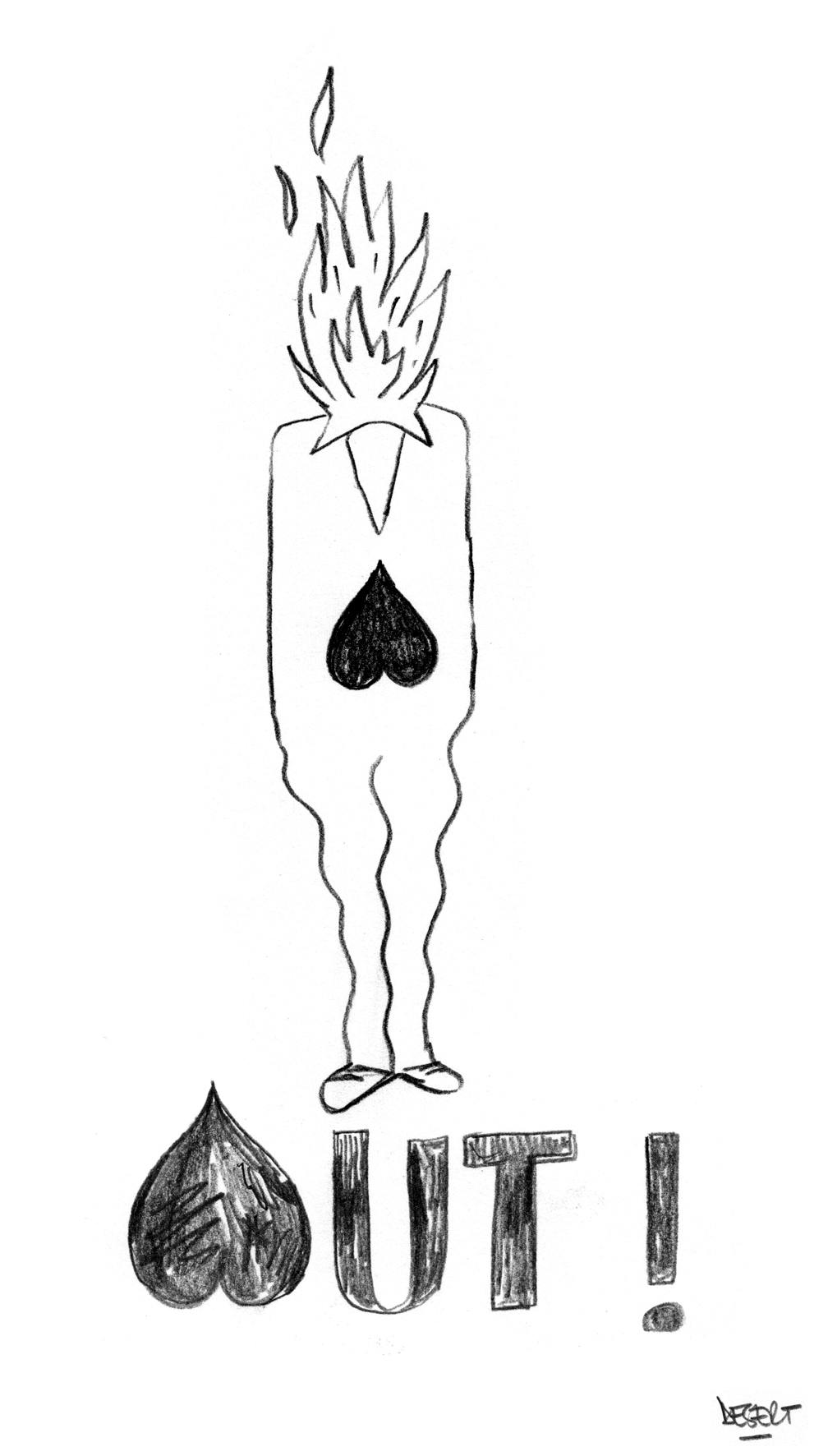
Burnout is rising worldwide. From Gallup to McKinsey, discover what the data — and the lack of it in Luxembourg — really reveals about workplace stress.
May 2025
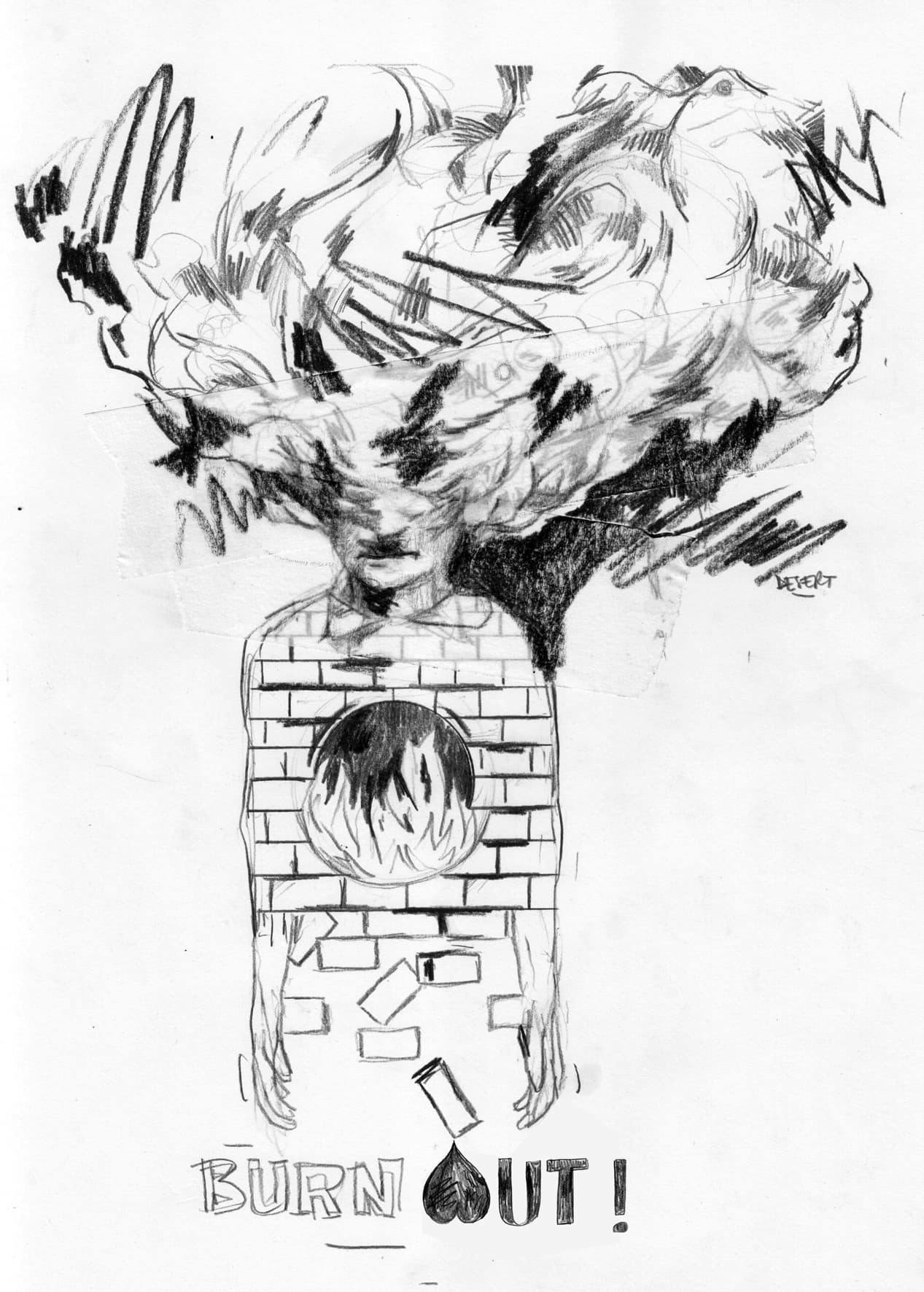
Beyond the numbers: definition of burnout, symptoms vs. boreout, and lived experiences to spot risks early and avoid collapse.
May 2025